
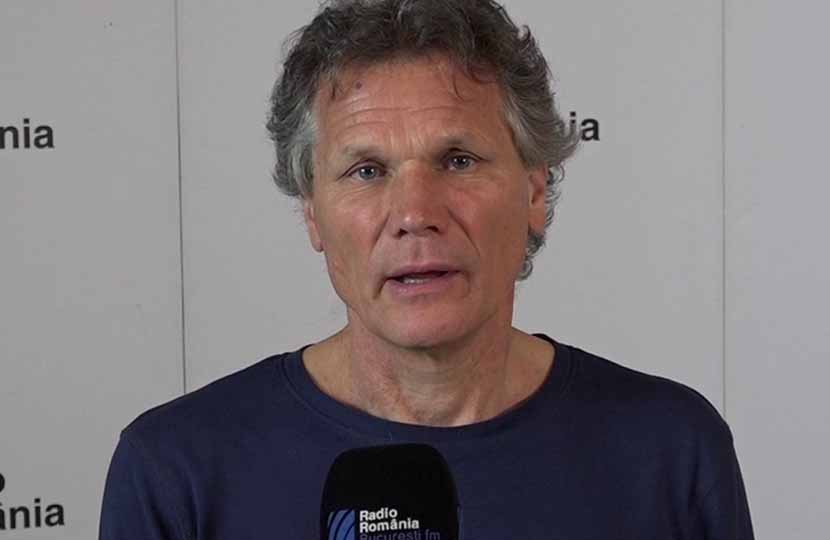
Name:
Wolfgang MayrProfession:
JournalistWhy did you choose Ethical Banking?
Because it offers a genuine opportunity to invest money sustainably – in renewable energy, organic farming, traditional craftsmanship or in support of people with disabilities. Beyond our region, these savings can also help, for example, indigenous farmers in the Ecuadorian Andes through small loans, education and support for self-sufficiency. A different kind of finance: sustainable and fair.What do you hope for Ethical Banking in the future?
I hope that Ethical Banking will play a more significant role in the South Tyrolean financial sector, in line with the direction encouraged by the European Union through its latest regulations. The major goal is the New Green Deal: transforming the economy towards greater sustainability, social justice and participation. Ethical Banking has been demonstrating this approach for 21 years, operating transparently and showing savers exactly where and how their money is invested. The videos by Roland Furgler on the website are informative evidence of this commitment.It is my hope that the new European policies will also help ensure that “alternative niches” finally become everyday practice. This is very much in the spirit of Friedrich Wilhelm Raiffeisen. The Raiffeisenkassen represent the original model for sustainable finance that is fit for the future.
How do you envision your bank in the future?
The financial scientist Alberto Lanzavecchia from Padua suggests transforming cooperative banks into banks for the common good – banks that support the common good economy and the real economy of hard-working people, regardless of their sector. Raiffeisen should remain true to its tradition, continue to develop and be the different kind of bank for savers and customers.Is there anything else you would like to add?
In 1972, the Club of Rome published its report “The Limits to Growth”, highlighting challenges such as resource scarcity, poverty, the global North-South divide, climate change and climate refugees. The scientists already recommended consistent environmental protection, a different approach to agriculture and birth control. The report was prepared by leading scientists from the Massachusetts Institute of Technology, highly qualified experts with a strong technological background. The work was financed by the Volkswagen Foundation with one million Deutsche Mark. Thirty million copies in thirty languages were sold. “The Limits to Growth” became a guide for reform-oriented political action – action that ultimately did not take place. Today, the consequences are being felt all the more strongly, and the costs are enormous. Can we continue as before?The provincial government intends to transform the economy towards greater sustainability – with the European Union now providing the necessary framework. In this regard, the Governor of South Tyrol and his team could learn a great deal from Ethical Banking of Raiffeisenkasse Bozen.