Agitu Gudeta Award 2026 goes to Sabine Schrott from Felderhof:
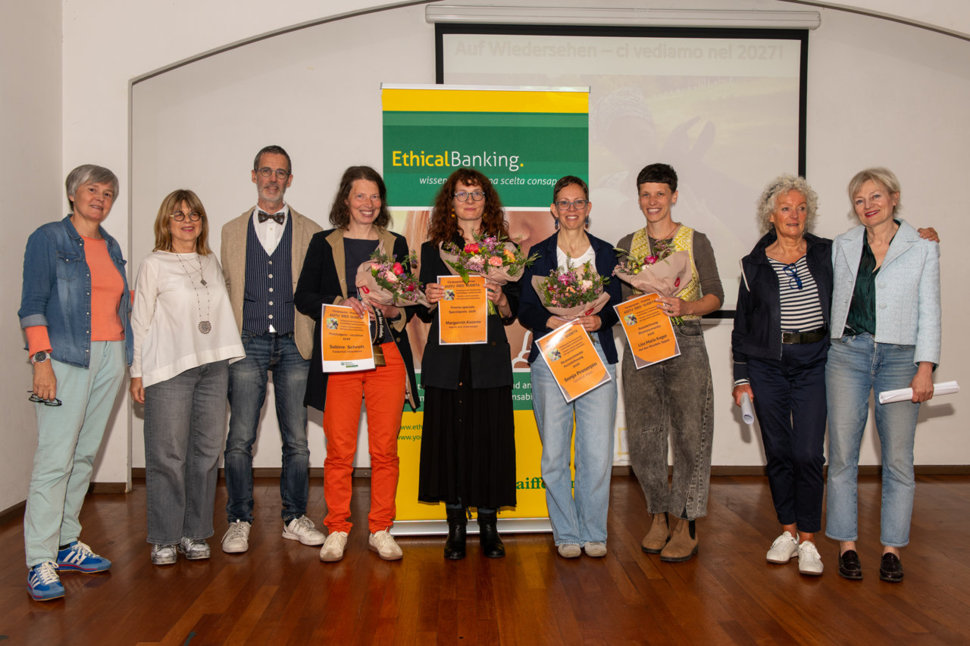
The 5th Agitu Ideo Gudeta Award was presented today at Centro Vintola in Bozen. The aim of the initiative group is to keep the legacy of Agitu Ideo Gudeta alive through this annual award.Over the five years since the award was established, around 15 women have received prize money totalling more than €20,000 in various categories. More than 60 candidates have applied for the award during this period. For the initiative group, which consists of five private individuals working on a voluntary basis, this represents a remarkable achievement.
With the award, the organisers aim to highlight women in South Tyrol who work as pioneers of future-oriented sustainable agriculture, combining multiple activities and acting as innovators in rural areas. Diversity, rather than monocultures, holds the potential for both stability and transformation – at both an entrepreneurial and societal level – as it enables new combinations and solutions.
The award winners demonstrate how different areas can be integrated into agricultural work, creating innovative approaches and new solutions. They contribute to product innovation and the development of new marketing channels. They combine culture, social engagement and health with agricultural activities, bringing new vitality to rural areas through their initiatives. They also contribute to landscape ecology and demonstrate the great creative potential of agriculture and rural regions.
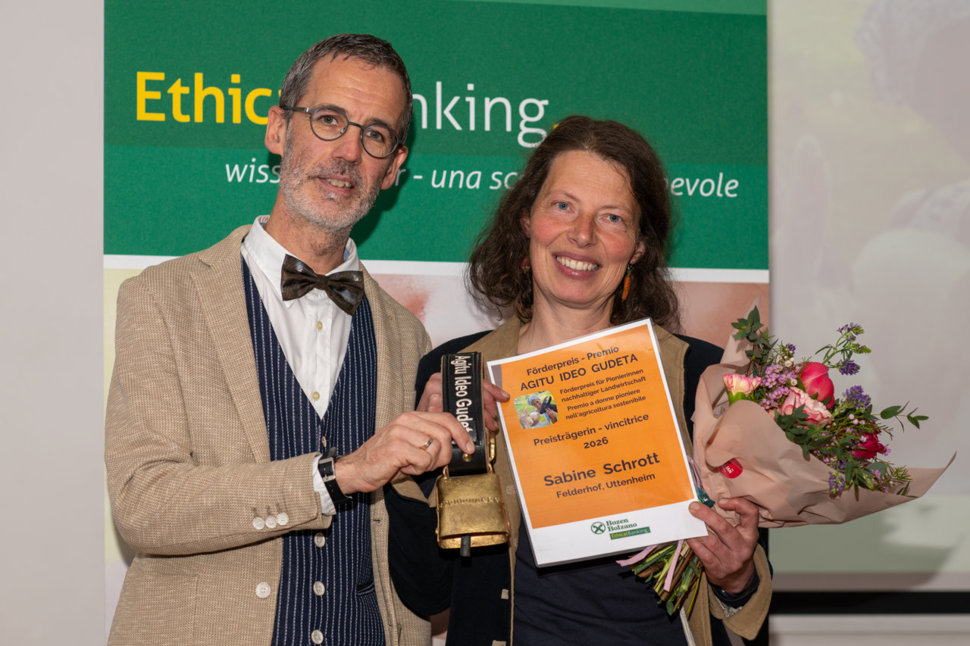
Agitu Gudeta Award 2026 goes to Sabine Schrott from Felderhof in Uttenheim
The award promoters Martina Schullian, Susanne Elsen, Alessandra Piccoli, Monika Gross and Marion Maier reviewed the applications submitted over the past months and decided to award the 2026 Agitu Ideo Gudeta Award to Sabine Schrott from Felderhof in Uttenheim in the Pustertal Valley."Sabine Schrott is one of the most convincing examples of combining diverse certified organic farming with the preservation and dissemination of local seeds, the cultivation of 400 open-pollinated varieties, the production of young plants, direct marketing, and community-based chicken and goat farming, while also integrating a wide range of non-agricultural activities such as farm holidays. Sabine Schrott from Felderhof, located at an altitude of 1,450 metres, has made outstanding contributions to the preservation of both tangible and intangible cultural heritage. She contributes to landscape ecology and advocates for the recognition of locally adapted seeds as a common good – a key issue for the future viability of agriculture and its independence from the transnational agro-industrial sector. Sabine is involved in international political and scientific networks promoting this important cause. She was nominated by a group of people who greatly admire her commitment," states the jury’s assessment.
The winner receives a prize of €2,500, provided by Raiffeisenkasse Bozen / Ethical Banking.
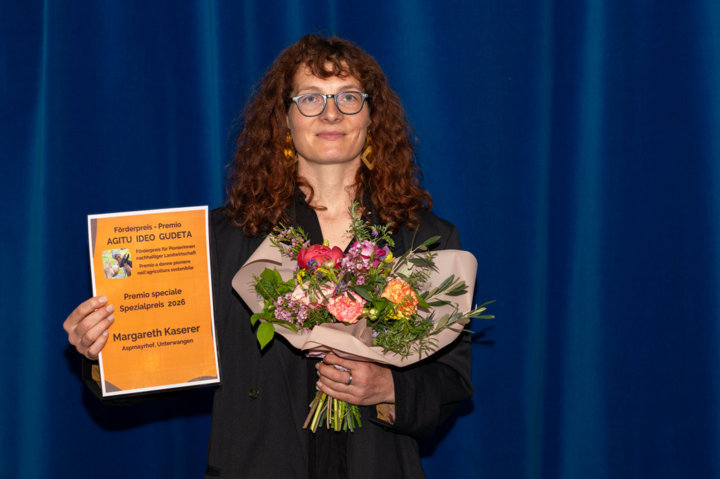
Special Award 2026 goes to Margareth Kaserer from Aspmayrhof on Ritten
The jury also awarded a Special Award of €1,000 to Margareth Kaserer from Unterwangen on Ritten."As an artist and farmer, Margareth Kaserer has successfully combined these two fields in a creative and productive way at Aspmayrhof. Under the name "Hotel Amazonas", she has created a vibrant centre for art and culture on her farm. Margareth Kaserer has organised numerous public art and cultural events in the fields of literature, visual arts and performance. Among other activities, she hosts international artists in residence. Through this work, she makes a valuable contribution to the innovative and sustainable development of her rural surroundings," the jury explains in its statement.
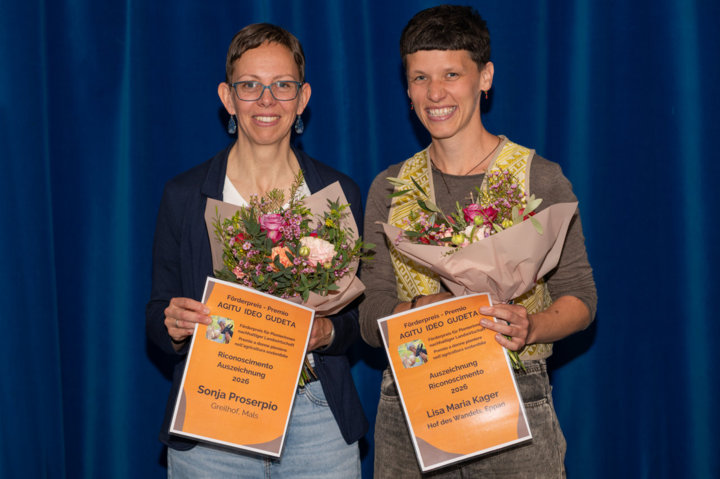
Recognitions for Lisa Maria Kager (Eppan) and Sonja Proserpio (Mals)
Two further candidates received a special recognition: Lisa Maria Kager from Hof des Wandels in Eppan and Sonja Proserpio from Greilhof in Mals. Both received a prize of €500.Lisa Maria Kager and her husband, both newcomers to agriculture, are not satisfied with simply farming organically at their farm, whose name Hof des Wandels (“Farm of Transformation”) already reflects their vision. They have made regenerative agriculture, humus building and raising awareness within their community their mission. In their view, climate change could be stopped if agriculture worldwide were practised consciously, responsibly and using regenerative methods. Lisa Maria also seeks to share her vision through educational programmes.
With great patience, expertise, time and dedication, Sonja Proserpio from Greilhof in Mals, together with her husband, has brought a historic early medieval farm back to life after decades of neglect. The property includes a Romanesque church as well as unused meadows, pastures and cultivation areas. As a trained land surveyor, Sonja Proserpio has transformed her passion for historic buildings into practical heritage conservation work and has acquired expertise in sustainable agriculture and animal husbandry. Today, she manages the historic Greilhof. What has been created here is a unique place and a valuable contribution to the tangible and intangible cultural heritage of the region.