
One thing is certain. Our responsibility is growing.
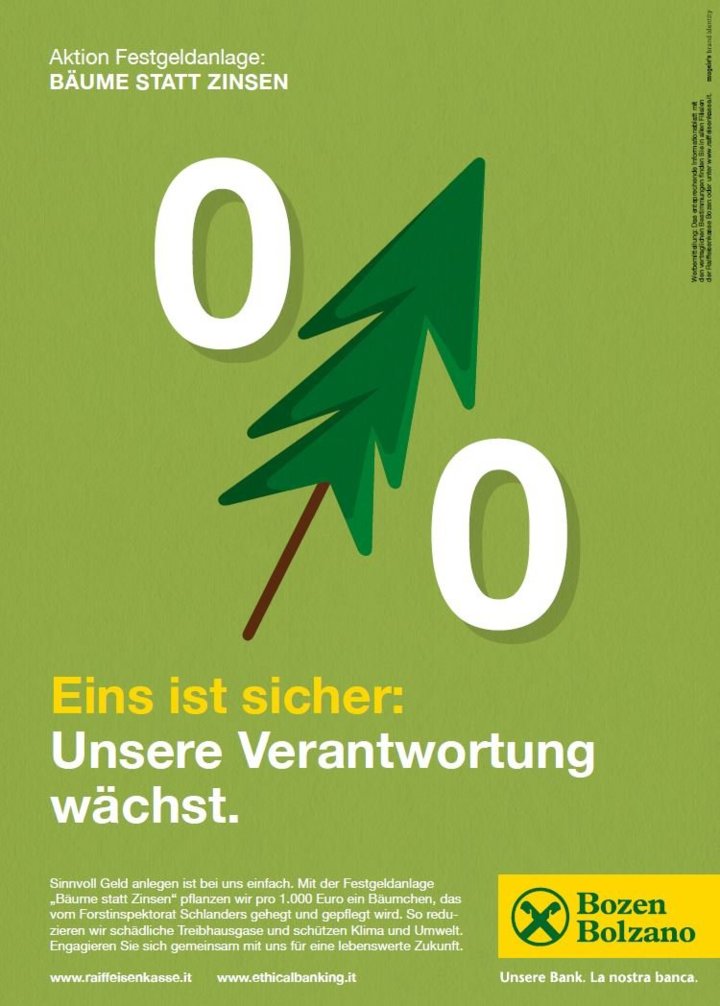
Our money plants trees
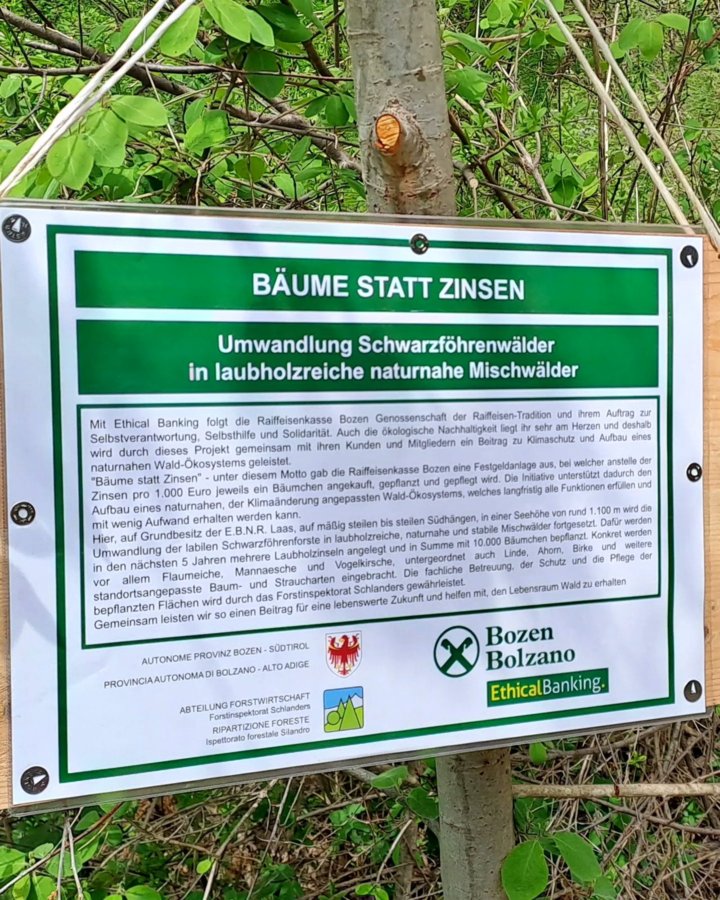
“This project is another important building block in the transformation of the sun-exposed pine forests into near-natural mixed forests rich in broadleaf trees. The concrete commitment and dedication of Raiffeisenkasse and its customers help us preserve a forest that is resilient to the future challenges posed by climate change and can continue to fulfil all its functions.” Georg Pircher, Head of Office at the Schlanders Forestry InspectorateThe effects of climate change are already visible in the artificially established coniferous forests on the “Vinschger Leiten” slopes. The non-native black pine stands are particularly affected. These forests were planted on around 900 hectares during a large-scale reforestation programme in the 1950s and 1960s. At that time, they served as an effective protection against erosion, rockfall and debris flows. Today, however, the otherwise drought-resistant black pine is suffering from extreme heat and low precipitation. Above all, it is increasingly threatened by the pine processionary moth, which is gradually causing the black pine stands to collapse.
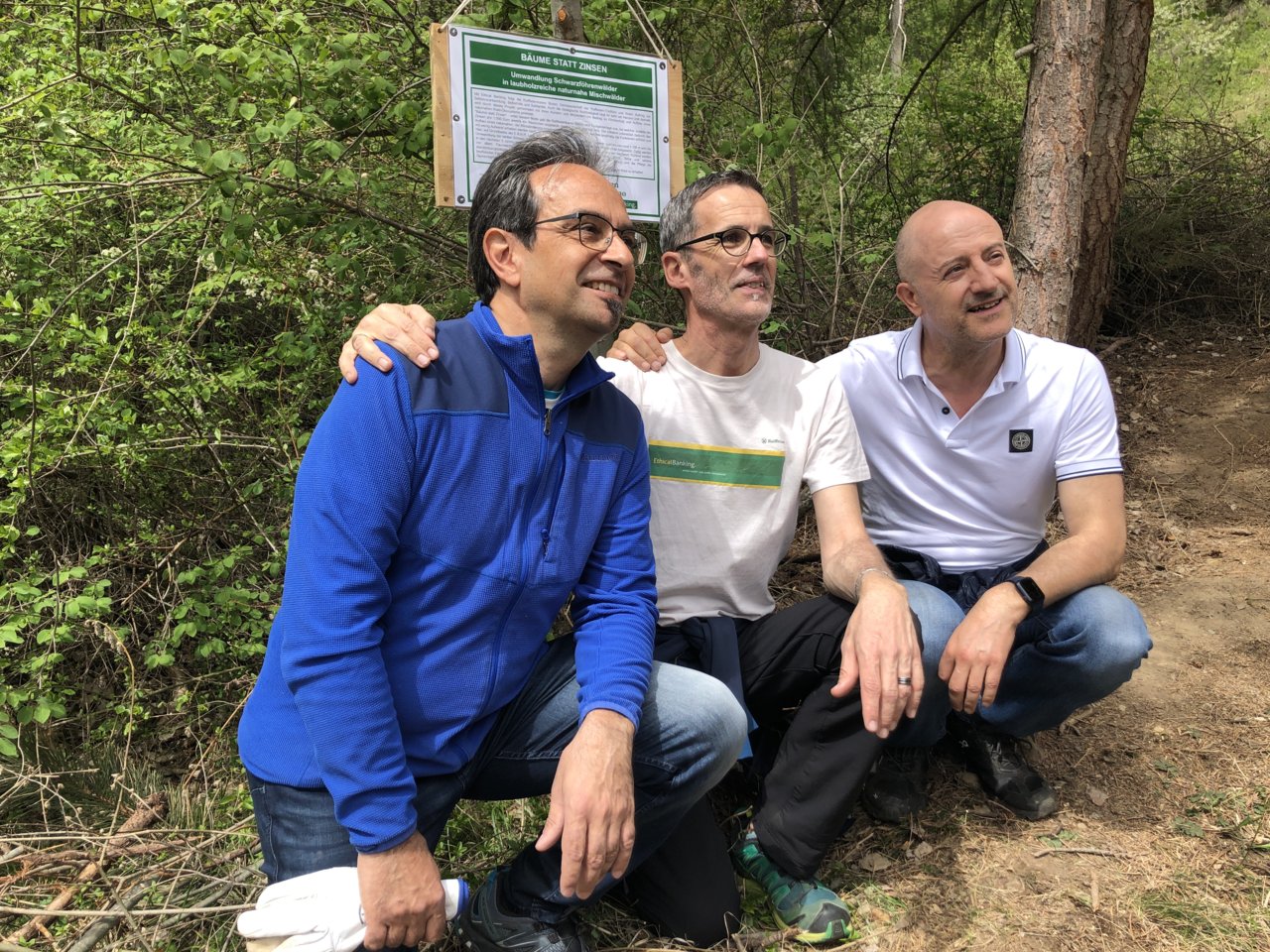
The conversion of these forests into mixed broadleaf forests is supported by the “Trees instead of interest” initiative. Over the next five years, the Schlanders Forestry Inspectorate will plant 10,000 climate-resilient and site-adapted broadleaf trees. These trees will give the Vinschgau Sonnenberg a future, create recreational areas, promote biodiversity and ensure that the ecological protective functions of the forest can continue to be fulfilled.
By giving up interest payments and making a minimum investment of €5,000, Ethical Banking customers financed the purchase and maintenance costs of one young tree with a contribution of €1,000 each.
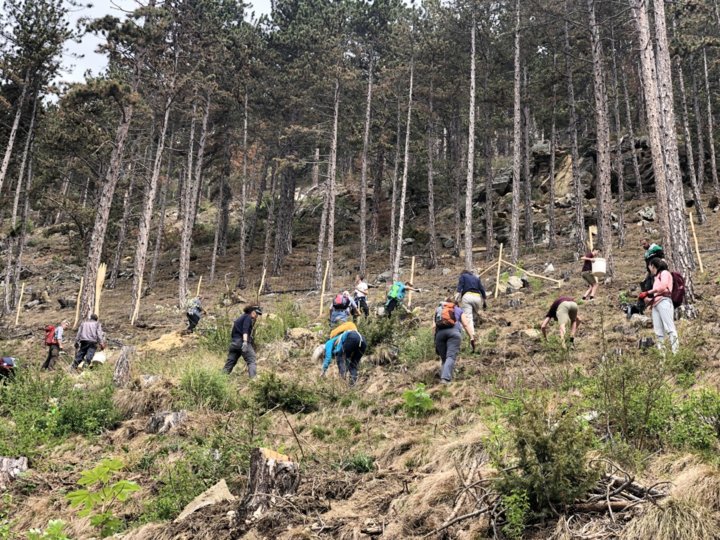
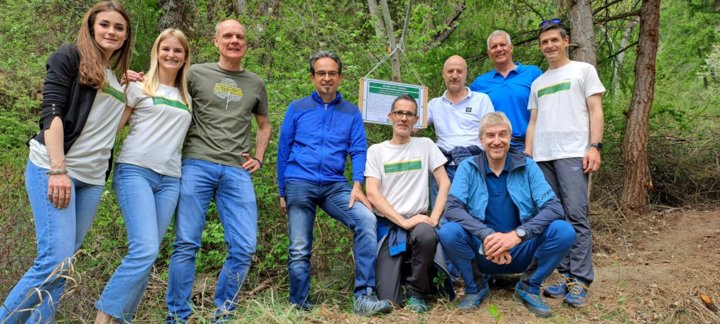
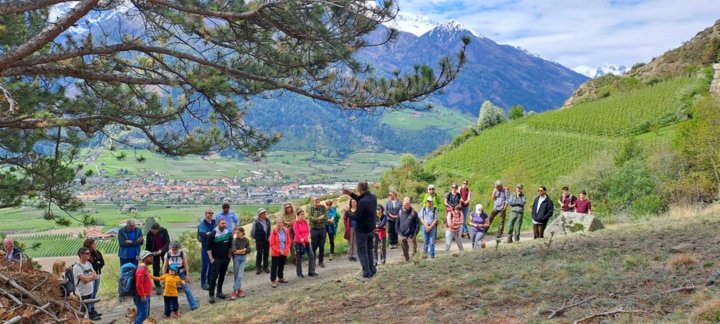
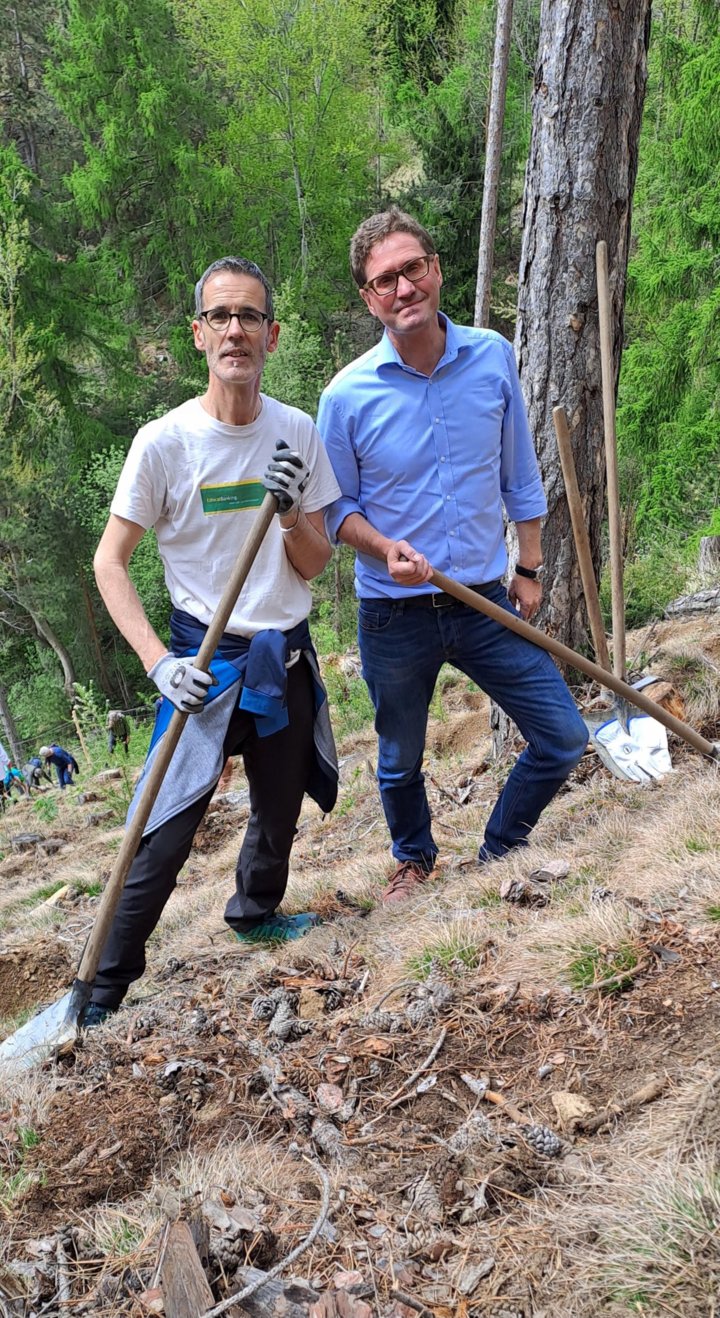
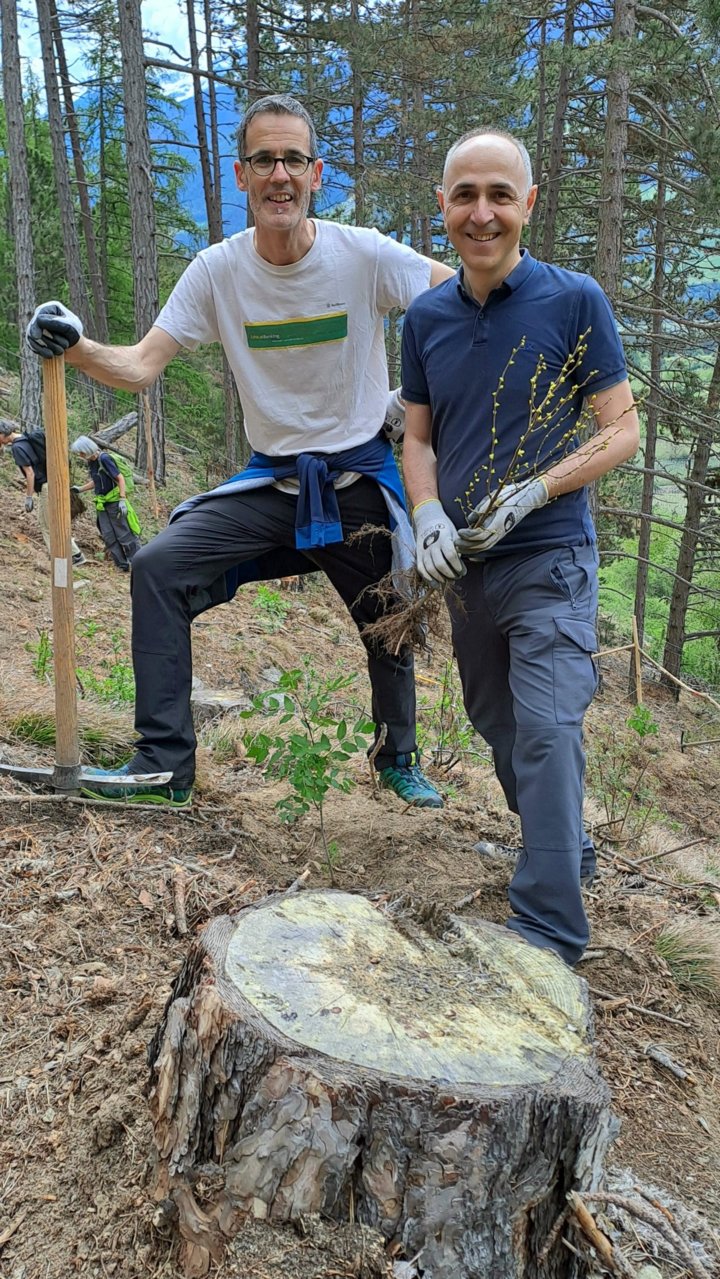
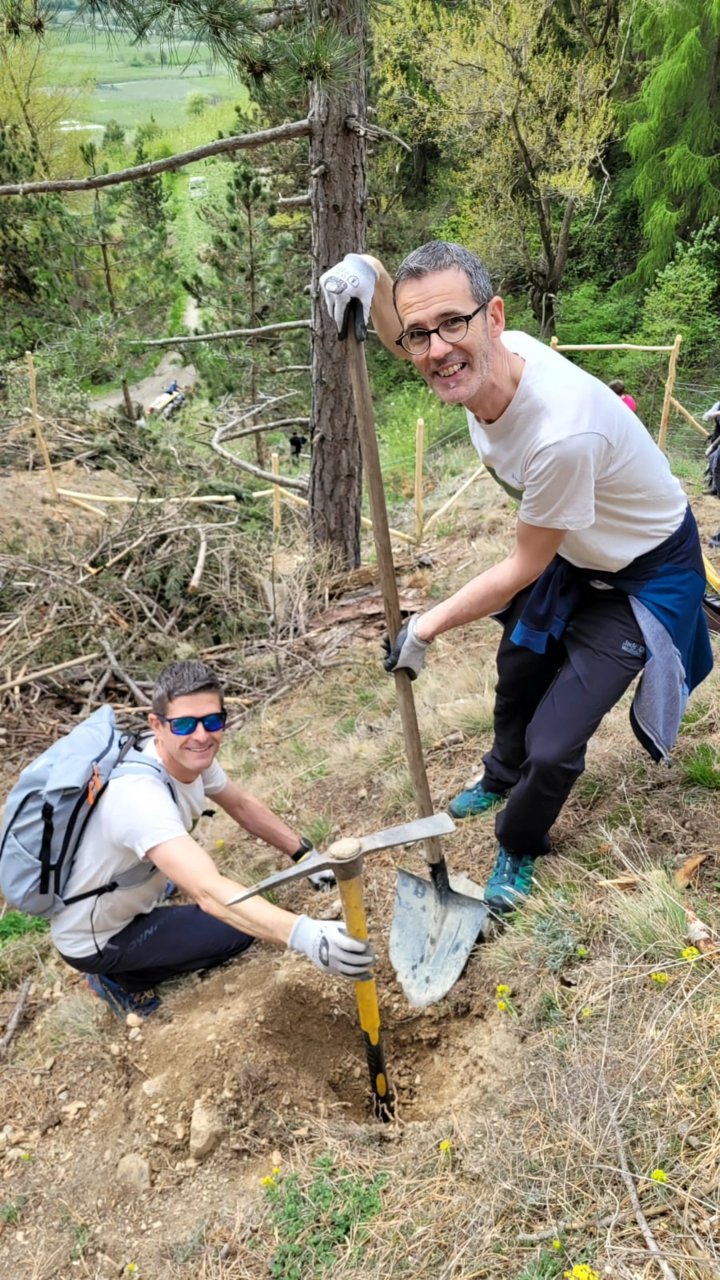
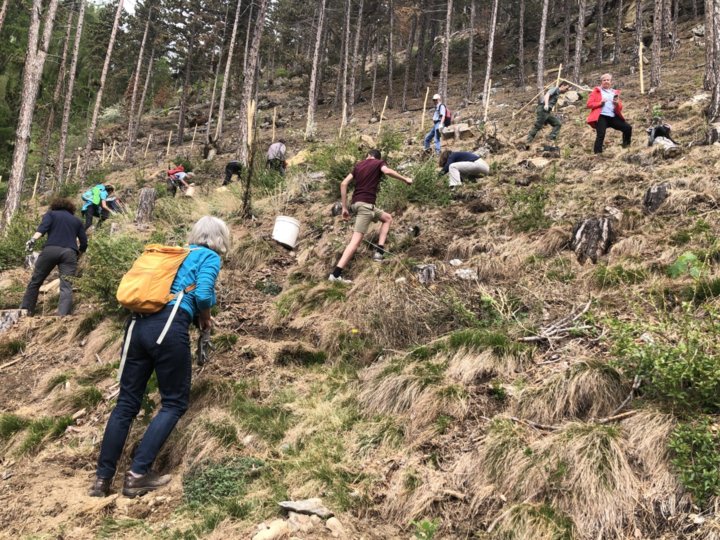
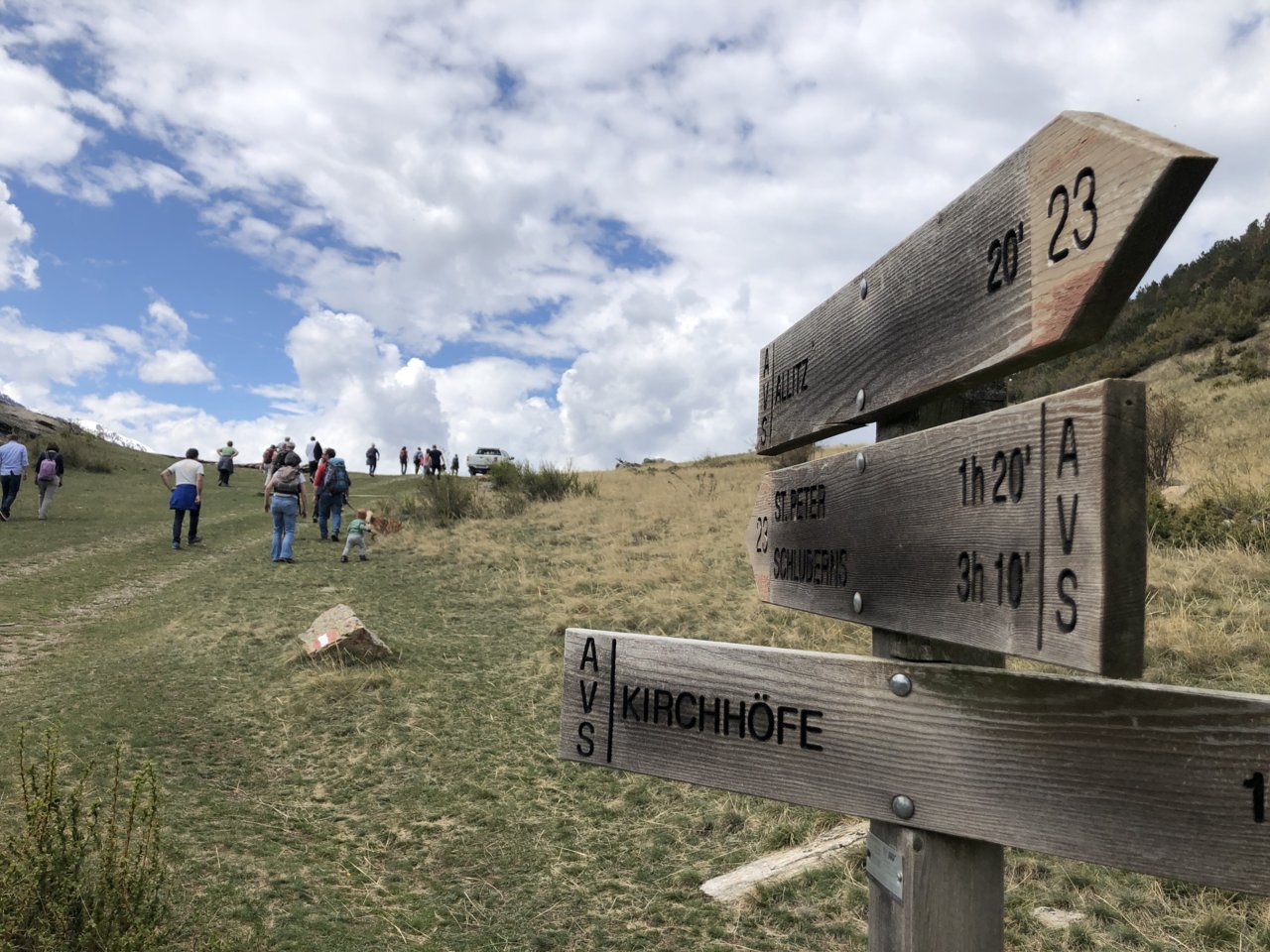
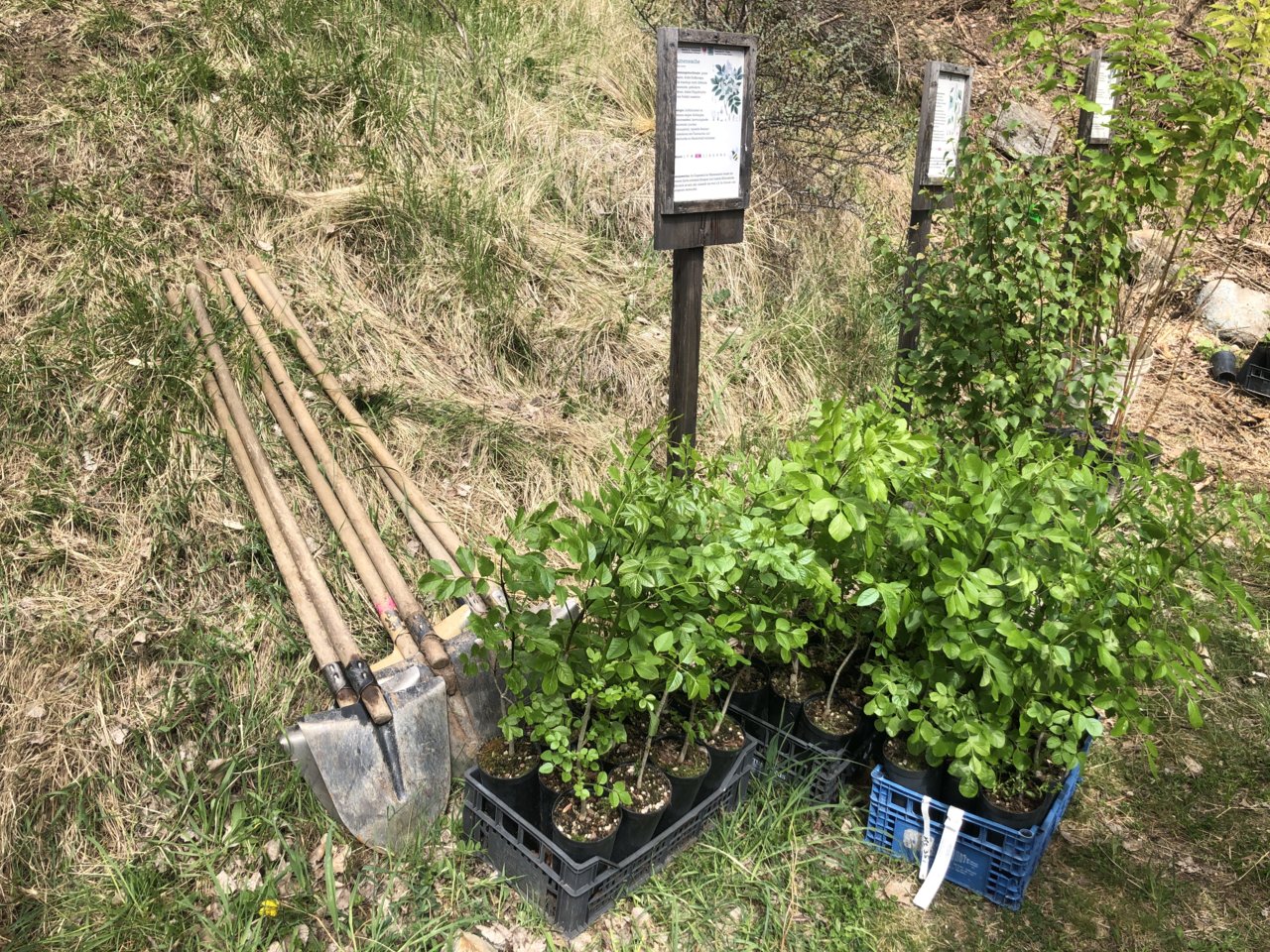
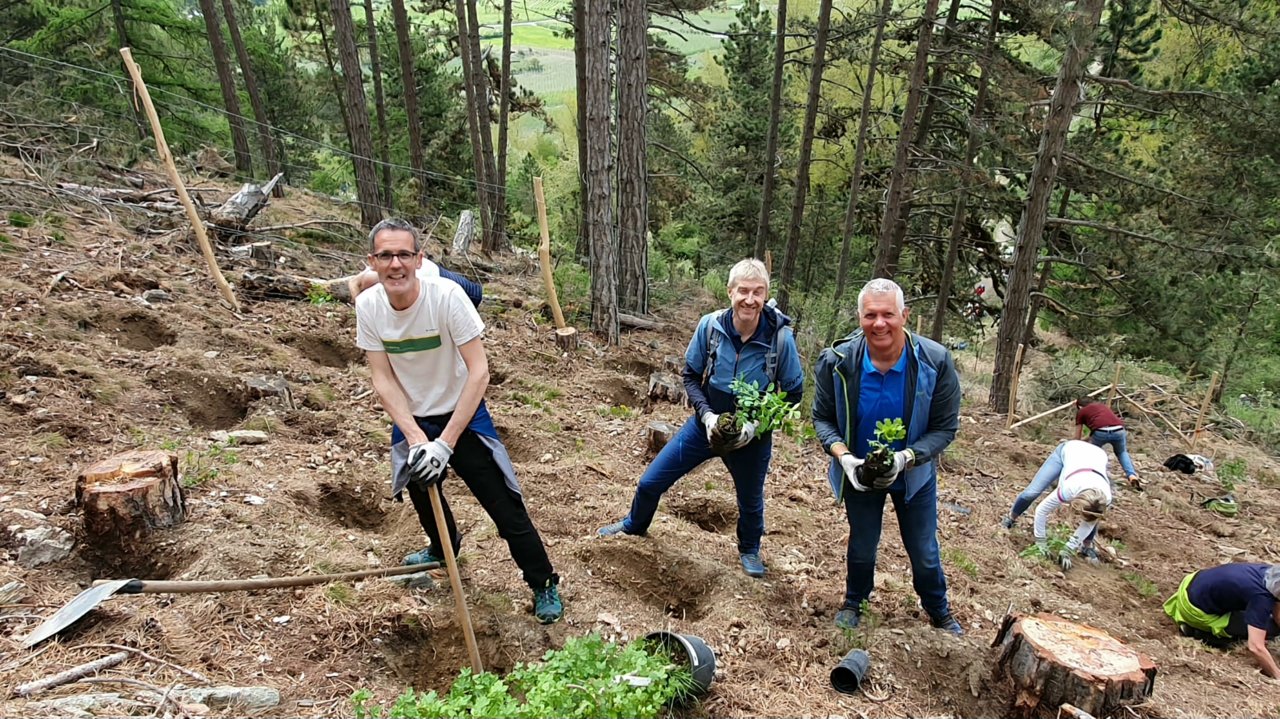
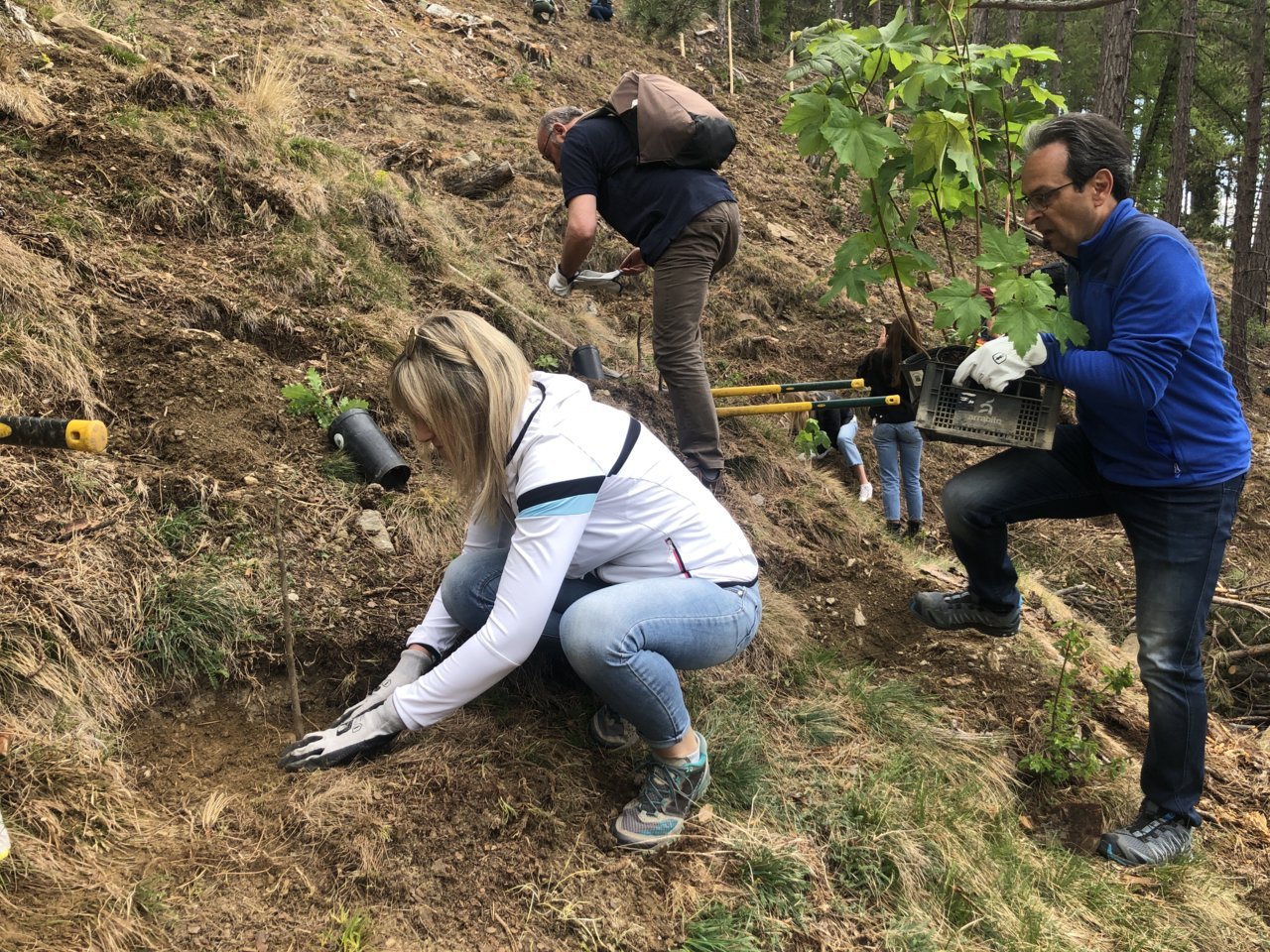
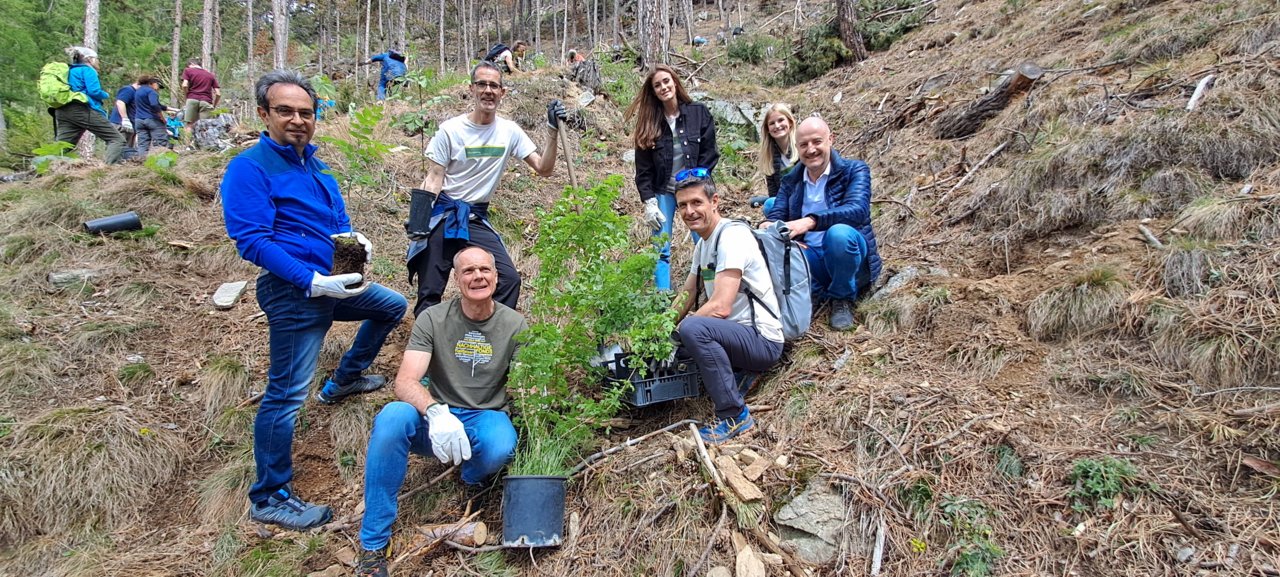
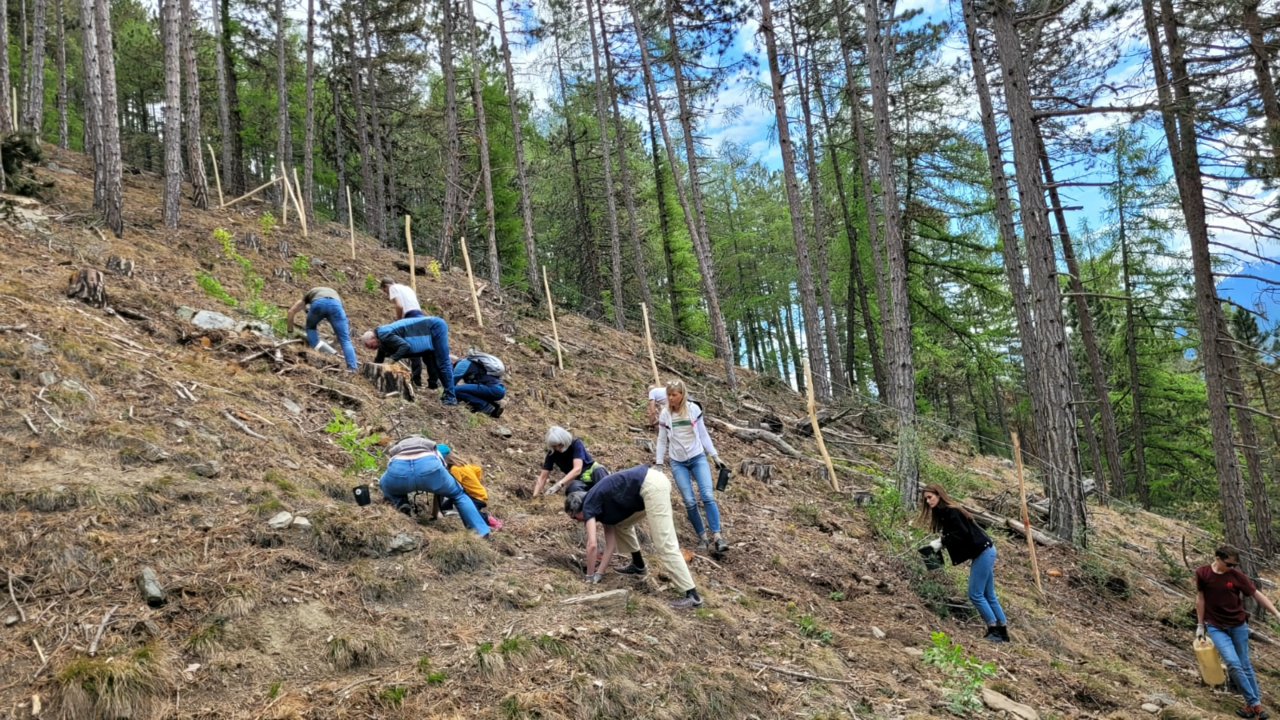
After an introduction by Georg Pircher, Head of Office at the Schlanders Forestry Inspectorate, and guided by local foresters, the participants took spades and hoes in hand to plant their trees in the prepared planting holes.
Downy oak, wild cherry, manna ash and numerous other native broadleaf tree species found a new home in the fenced-off young forest area on the Vinschgau Sonnenberg, protected from wildlife damage.
Christian Hoffmann and Lion Glückert, two researchers from the Eurac Institute for Regional Development, used the opportunity to learn more about the planting campaign. Through a questionnaire, they asked participants about their motivations and gained insights into the reasons behind their involvement in the “Trees instead of interest” initiative. They also asked about their willingness to finance further ecological or social projects.
The researchers also informed the interested participants about the current issue of bark beetle infestations in South Tyrol’s forests: the importance of the small beetle under normal conditions; how climate change favours its biology; how the beetle, which is specialised on a specific host tree species, uses pheromones to communicate with other beetles, find partners or locate suitable trees; how trees defend themselves against infestation; and how successful attacks lead to the characteristic feeding patterns beneath the bark, where parent galleries and larval tunnels are created for up to 80 eggs. Within 8–12 weeks, these develop into adult beetles. Under favourable conditions, the beetle population can grow exponentially – a process that has already affected more than 6,000 hectares of forest in South Tyrol.
Despite these alarming figures, research shows that bark beetle populations collapse after a period of around three to four years and return to a “normal” level if no new breeding material becomes available through windthrow or snow damage.
Forests exposed to the sun and characterised by dry conditions are particularly vulnerable to collapse. Their tree composition needs to be transformed in the next generation. Since natural regeneration cannot keep pace with rapidly changing climatic conditions, these forests require active support.
The newly planted broadleaf forest area on the Allitz Sonnenberg now represents a stepping stone towards transforming the black pine forests of the “Vinschger Leiten” into a forest ecosystem adapted to climate change.
This newly established forest cell is more resilient and adaptable than a pure black pine forest. Starting from these initial areas, mixed broadleaf forests can gradually develop, providing protection for the inhabitants of the Vinschgau for many years to come while also serving as valuable recreational areas.
Authors: Lion Glückert & Christian Hoffmann
And here you can watch the short film – please click here.
Das The Institute for Regional Development at Eurac scientifically accompanied our tree planting day in the upper Vinschgau region. Here you can read the final report.
1.7 Mb
870.08 Kb